 May 29, 2026
 Dr. Ashima Mehta
Early Signs, Causes & When to Seek Professional Help
Speech and language development is one of the most important milestones during early childhood. Every child develops at their own pace, but significant delays in speaking or understanding language may indicate the need for professional evaluation. Speech Delay
Many parents often wonder whether their child is simply a “late talker” or if there is an underlying developmental concern. Understanding the warning signs of speech delay can help families take timely action and support their child’s communication development.
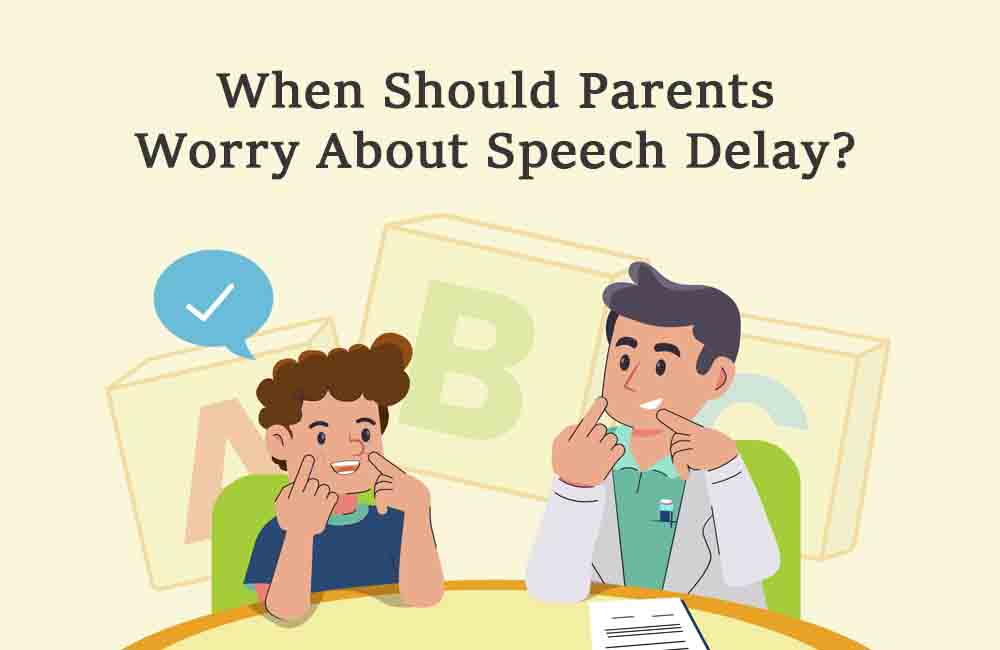
What is Speech Delay?
Speech delay occurs when a child does not develop speech and language skills according to expected age milestones. Some children may have difficulty pronouncing words clearly, while others may struggle to understand language or express their thoughts.
Speech delay can affect communication, learning, social interaction, and confidence if left unaddressed.
Common Early Signs of Speech Delay
1. No Babbling by 12 Months
Babbling is an important early communication milestone. If a baby is not making sounds like “ba-ba” or “ma-ma” by one year of age, it may indicate delayed speech development.
2. Limited Words by 18 Months
Most toddlers begin using simple words by 15–18 months. A child who uses very few words or struggles to imitate sounds may need developmental assessment.
3. Difficulty Combining Words by Age 2
By two years of age, children usually start combining two-word phrases like “want water” or “come here.” Delayed phrase formation can be a warning sign.
4. Poor Understanding of Instructions
Children with speech or language delay may have trouble understanding simple instructions, responding to their name, or following basic communication cues.
5. Unclear Speech After Age 3
If parents or caregivers find it difficult to understand a child’s speech after age three, professional speech evaluation may be helpful.
Possible Causes of Speech Delay
Speech delay may occur due to several reasons, including:
-
 Hearing problems
-
Developmental delays
-
Autism Spectrum Disorder
-
Oral-motor difficulties
-
Neurological conditions
-
Environmental and social factors
In some cases, children may simply develop speech later than others, but persistent delays should not be ignored.
When Should Parents Seek Professional Help?
Parents should consult a pediatrician or speech-language specialist if:
- The child is not speaking age-appropriate words
- There is loss of previously learned speech skills
- The child shows poor eye contact or social interaction
- Speech is difficult to understand
- Communication difficulties affect daily activities
Early intervention can significantly improve speech, language, and social development.
How Speech Therapy Helps
Speech therapy focuses on improving communication skills through structured activities, language stimulation, and interactive learning techniques. Therapy can help children improve vocabulary, pronunciation, comprehension, and confidence.
Parental involvement also plays a major role in encouraging speech development at home through reading, talking, and play-based communication.
Every child develops differently, but parents should pay attention to communication milestones during the early years. Recognizing speech delay symptoms early and seeking professional guidance can help children receive the right support at the right time.
With early diagnosis, therapy, and family support, many children with speech delay show significant improvement in communication and overall development.
Recent Blogs
-
Understanding ADHD in Children
-
Early Signs of Autism Every Parent Should Know
-
When Should Parents Worry About Speech Delay?